
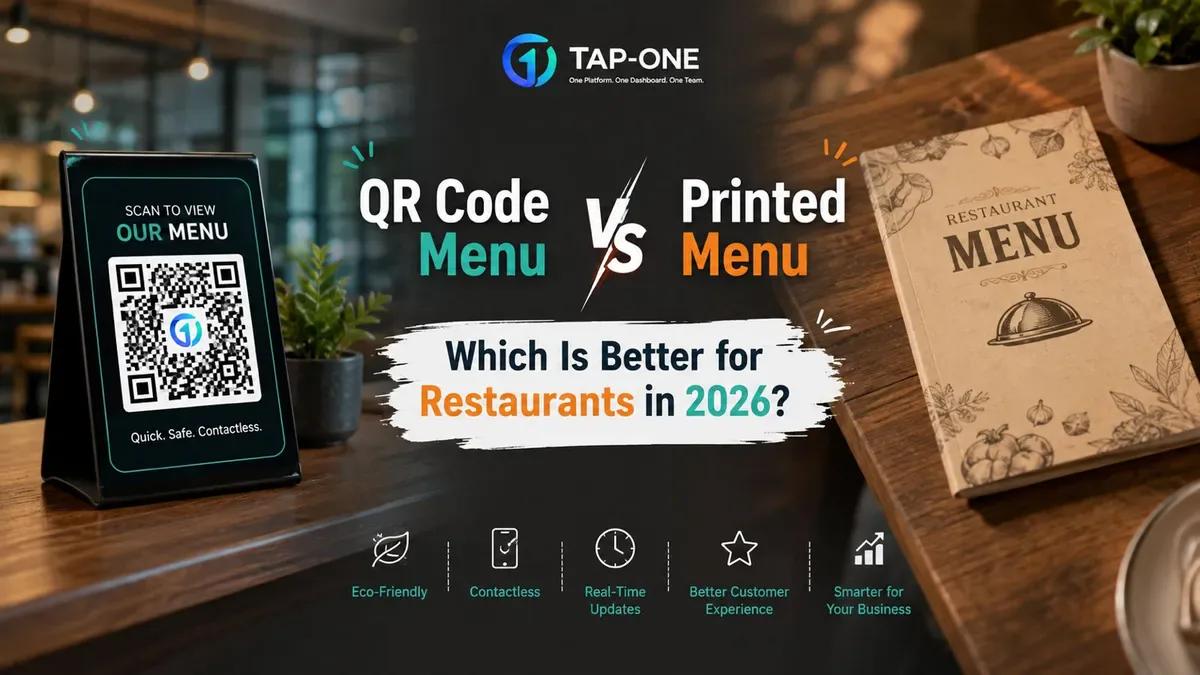
What a Printed Menu Actually Costs You Over Time
Change a price, add a seasonal item, run out of something, and a printed menu has to be edited, printed, laminated, then physically swapped table by table. For a place running fifteen or twenty tables that's not a one-off expense; it repeats every single time the menu shifts, and most kitchens change something more often than they'd admit out loud.
There's also a hygiene angle nobody likes discussing much. A laminated card gets handled by hundreds of hands a week and almost never gets wiped down between them, a page speed and usability tradeoff web.dev (opens in new tab) also touches on when comparing static vs. dynamic content.
Cost and Experience, Side by Side
| Factor | Printed Menu | QR Code Menu |
|---|---|---|
| Cost per price change | Reprint + laminate every table copy | Free, updates instantly |
| Photos of dishes | Rarely, clutters the layout | Standard, improves order value |
| Out-of-stock handling | Verbal correction from staff | Hidden instantly from the menu |
| Language support | One printed language, maybe two | Renders in the customer’s own phone language |
| Hygiene | Shared, rarely cleaned between uses | No shared physical object |
What Actually Improves With a Digital Menu
- Price and item changes go live across every table instantly, no reprint cycle involved.
- Room for dish photos, short descriptions, and dietary tags without cramming a printed layout.
- Sold-out items can be pulled in seconds during a busy service instead of a server repeating "that’s not available" all night.
- One scan renders in whatever language the customer's phone is already set to, no need to print separate versions.
- Nothing to physically lose, tear, or replace.
Where a Printed Backup Still Makes Sense
Not everyone wants to scan a code, and pretending otherwise is a mistake. Older customers especially, or anyone unfamiliar with the process, tend to prefer holding something. The practical middle ground for most Indian restaurants right now is a digital menu as the default with a slim printed card kept as backup, updated far less often since it only needs to cover the stable core of what you serve.
How This Plays Out for Cafes vs. Full-Service Restaurants
A cafe with a smaller, more stable menu can lean almost entirely digital, since changes are infrequent and the customer base tends to be younger and comfortable scanning.
A full-service restaurant with a larger menu and more frequent seasonal changes benefits even more from digital, precisely because the update burden on a printed version would be heavier.
What Actually Matters When Choosing a QR Menu Tool
- Can you, or your provider, update it yourselves in minutes rather than days?
- Does it load fast on an average 4G connection, because nobody waits ten seconds for a menu.
- Does it open directly in the browser with no app download required?
- Does it show which dishes actually get viewed, so pricing and promotion decisions stop being guesswork?
- Can the same scan move from viewing the menu straight into placing an order?