What a Profile-Only Setup Gets Right, and Where It Falls Short
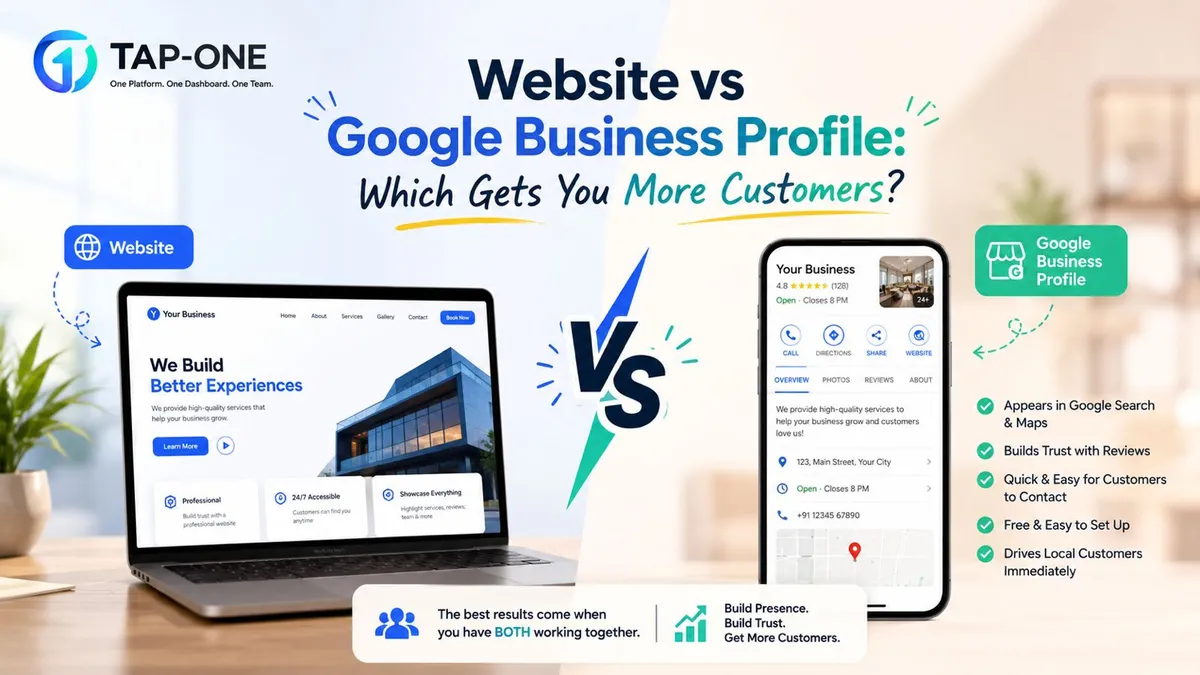
This isn't really a debate, though it gets framed as one constantly. Both tools do a specific job well and fail at a different one, and pretending it's a single choice is where most owners lose ground.
- Costs nothing to set up or keep running
- Shows up directly in local search and Maps with no extra work
- Hours, photos, and reviews update instantly, no developer involved
- You don't own it; Google can change the format or rules whenever it wants
- Almost no room for real storytelling, no detailed service pages, no blog, no brand depth
- Zero control over layout or the customer's journey beyond the basics Google allows
What a Website Actually Buys You
A profile-only business lives entirely inside Google's ecosystem, which is fine right up until it isn't.
- Full control over branding, messaging, and the actual experience
- Room for content, detailed FAQs, and SEO that reaches beyond local search
- A destination you fully own; no algorithm update can delete it overnight
- Costs money to build and maintain, or costs time if you're doing it yourself
- Doesn't automatically appear in local Maps results without proper SEO work behind it, the kind [[Google Search Central|searchCentral]] documents in detail
- Needs regular updates to stay relevant; a static site goes stale fast
Head-to-Head Comparison
| Factor | Google Business Profile Only | Website Only | Both Together |
|---|---|---|---|
| Cost | Free | Ongoing hosting/build cost | Cost of a website, profile stays free |
| Walk-in / near-me visibility | Strong | Weak without SEO work | Strong |
| Brand storytelling | Very limited | Full control | Full control |
| Online bookings/ordering | Basic, if supported | Fully customizable | Fully customizable |
| Risk of platform change | High, no ownership | Low, you own it | Balanced |
When One Actually Matters More Than the Other
The honest answer to "do I need a website" depends entirely on what you're optimizing for. Walk-in traffic right now, the profile wins. Brand and trust over the next year, the website wins.
- A profile alone tends to be enough for restaurants and cafes running almost entirely on nearby foot traffic
- Service businesses like plumbers or electricians, where speed to a phone call matters more than browsing, fit the same pattern
- Same for a very early business still testing whether there’s real demand before investing further
- A website matters more once you're building a brand people search for by name rather than just by category
- Also true if you sell online or need to explain something genuinely complex
- And obviously true if you're running paid ads that need a dedicated, trackable page to land on
How This Plays Out Across Different Industries
A clinic or dental practice leans harder toward needing a website, since patients research credentials and services before booking, and a profile alone rarely provides enough depth to close that decision.
A salon or barbershop can often run on a profile plus a booking link for longer, since the decision cycle is shorter and more impulse-driven, often triggered by a walk past or a quick search nearby.
A hotel almost always needs both, given how much research typically goes into a booking decision and how much a website can showcase that a profile physically cannot.
The Two Together Do More Than Either Alone
A website and a profile aren't really competing for the same job, they hand off to each other.
The profile is usually the first thing a customer sees. It gets found, builds early trust through reviews and photos, then passes the customer along through a link to somewhere with more depth and more reason to actually convert.
A clinic with only a profile might get the phone call. The same clinic with a website showing credentials, patient stories, and clear service details tends to get the booking with a lot less back-and-forth.
This only works if the branding matches across both. A profile and a website that look like two different businesses actually hurts trust more than having no website at all.
A Real Example From a Salon in Jaipur
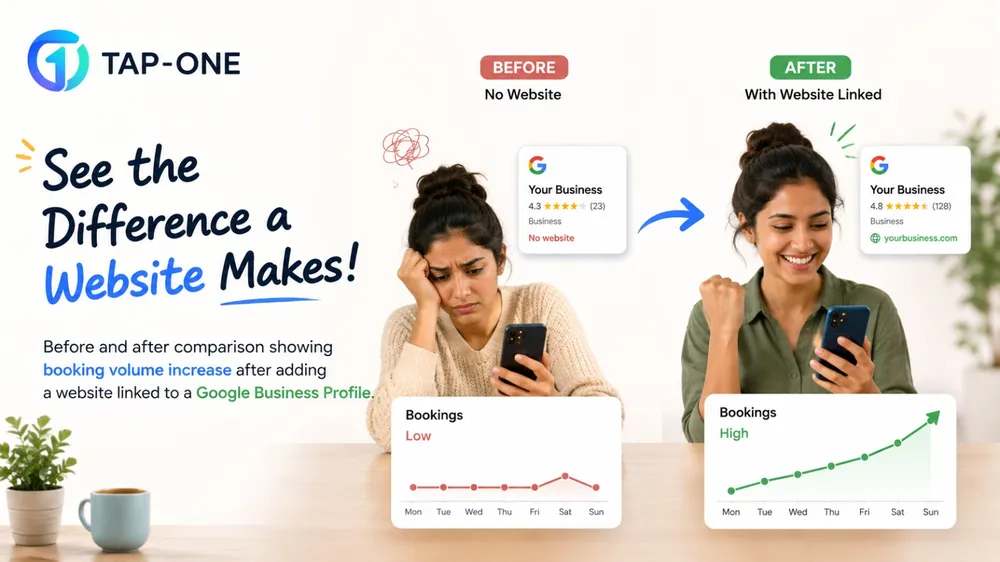
I worked with a salon that had a genuinely solid profile, 4.7 stars, sixty reviews, decent photos. Walk-ins were steady. But bookings from outside their immediate neighborhood were close to zero.
We built a fairly simple website that linked straight from the profile, showing their service menu, pricing, and a booking button. Within two months, bookings from further out picked up noticeably, people who'd found them on Google and then dug a bit deeper on the website before actually committing.
The profile got them found. The website got them booked. Neither piece alone would’ve covered both jobs.